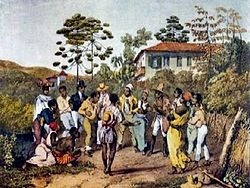
I am the samba
Samba is a musical genre, from which derives a type of dance, with African roots that emerged in Brazil and considered one of the main Brazilian popular cultural manifestations.[1][2][3] Among its original characteristics, there is a form where the dance is accompanied by small melodic phrases and choruses of anonymous creation, foundations of the samba de roda born in the Recôncavo Baiano[4] and taken, in the second half of the 19th century, to the city of Rio de Janeiro. de Janeiro by the blacks who were brought from Africa and settled in the then capital of the Empire. The samba de roda from Bahia, which in 2005 became a UNESCO World Heritage Site,[5][6] was one of the foundations for samba in Rio. Despite existing in various parts of the country - especially in the states of Bahia, Maranhão, Minas Gerais and São Paulo - in the form of various rhythms and regional popular dances that originated from batuque, samba as a musical genre is understood as an urban musical expression in Rio de Janeiro, where this samba format was born and developed between the end of the 19th century and the first decades of the 20th century. It was in Rio de Janeiro, the former capital of Brazil, that the dance practiced by freed slaves came into contact and incorporated other musical genres played in the city (such as polka, maxixe, lundu, xote, among others), acquiring a character totally unique. Thus, although there were several regional forms of samba in other parts of the country, urban carioca samba left the local category to be elevated to the status of symbol of Brazilian national identity during the 1930s.[7][8][9] A milestone in the modern and urban history of samba occurred in 1917, in Rio de Janeiro itself, with the recording of "Pelo Telephone", considered the first samba to be recorded in Brazil (according to the National Library records). The song has the authorship claimed by Ernesto dos Santos, better known as Donga, with co-authorship attributed to Mauro de Almeida, a well-known carnival chronicler. In fact, "Pelo Telephone" was a collective creation of musicians who participated in the parties at Aunt Ciata's house, but it ended up being registered by Donga e Almeida at the National Library.[10]"Pelo Telephone" was the first composition to achieve success with the samba brand and would contribute to the dissemination and popularization of the genre. From that moment on, this urban samba from Rio de Janeiro began to spread across the country, initially associated with carnival and later acquiring its own place in the music market. There were many composers such as Heitor dos Prazeres, João da Baiana, Pixinguinha and Sinhô, but the sambas of these composers were amaxixados, known as sambas-maxixe. The modern contours of this urban samba in Rio would only come at the end of the 1920s, from innovations on two fronts: with a group of composers from the carnival blocks in the neighborhoods of Estácio de Sá and Osvaldo Cruz and with composers from the hills of the city, as in Mangueira, Salgueiro and São Carlos.[8] It is not by chance that this samba format is identified as "genuine" or "rooted". As samba in Rio de Janeiro consolidated itself as an urban and modern musical expression, it began to be played on a large scale on radio stations, spreading through the hills of Rio de Janeiro and neighborhoods in the south of Rio de Janeiro. Initially criminalized and viewed with prejudice, due to its black origins, samba would conquer the middle-class audience as well.
Synopsis
Written by
View profileeu sou uma menina de 10 anos que adora ler,e escrever mais principalmente navegar pela internet colando e copiando.
Recommendations
0Be the first to recommend this story to other readers!


More like this

One fateful day a car accident occurs. William is a young man new to the region who almost dies of hunger. But he has something that makes him different from everyone else. In a good way? Many would say yes. Furthermore, your decisions are questionable, but in your place you would probably do the same. It's like waking up one day feeling like God, but not knowing your true role. Being normal is a gift.


Synopsis: In a city full of brave heroes and terrifying villains, lives Gabriel, an ordinary and fearful man, who works as a night watchman in a small commercial building. Despite his fearful nature, Gabriel always dreamed of being a hero, but never had the courage to take the risk. However, everything changes when he witnesses a mysterious crime that threatens the safety of his city. Driven by the need to protect his loved ones and his community, Gabriel decides to face his fears and become an unlikely hero. Alongside his eccentric friends and an enigmatic mentor, he embarks on a journey of self-discovery and overcoming, learning that true courage is not in not feeling fear, but in facing it head on. In "The Fearful Vigilante", adventure, comedy and heroism intertwine as an ordinary man becomes a true guardian of the city.
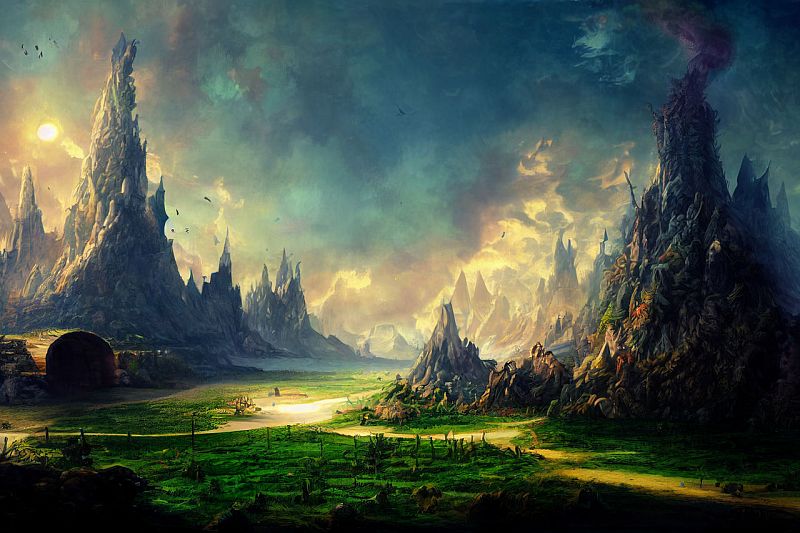

Freedan continues his journey to become Midgardia's greatest adventurer. However, the more experienced it gets, the more difficult your missions are. However, he is not alone. With the help of his allies inside and outside the White Swan Guild, Freedan will fulfill various missions and become an important Midgardia name.
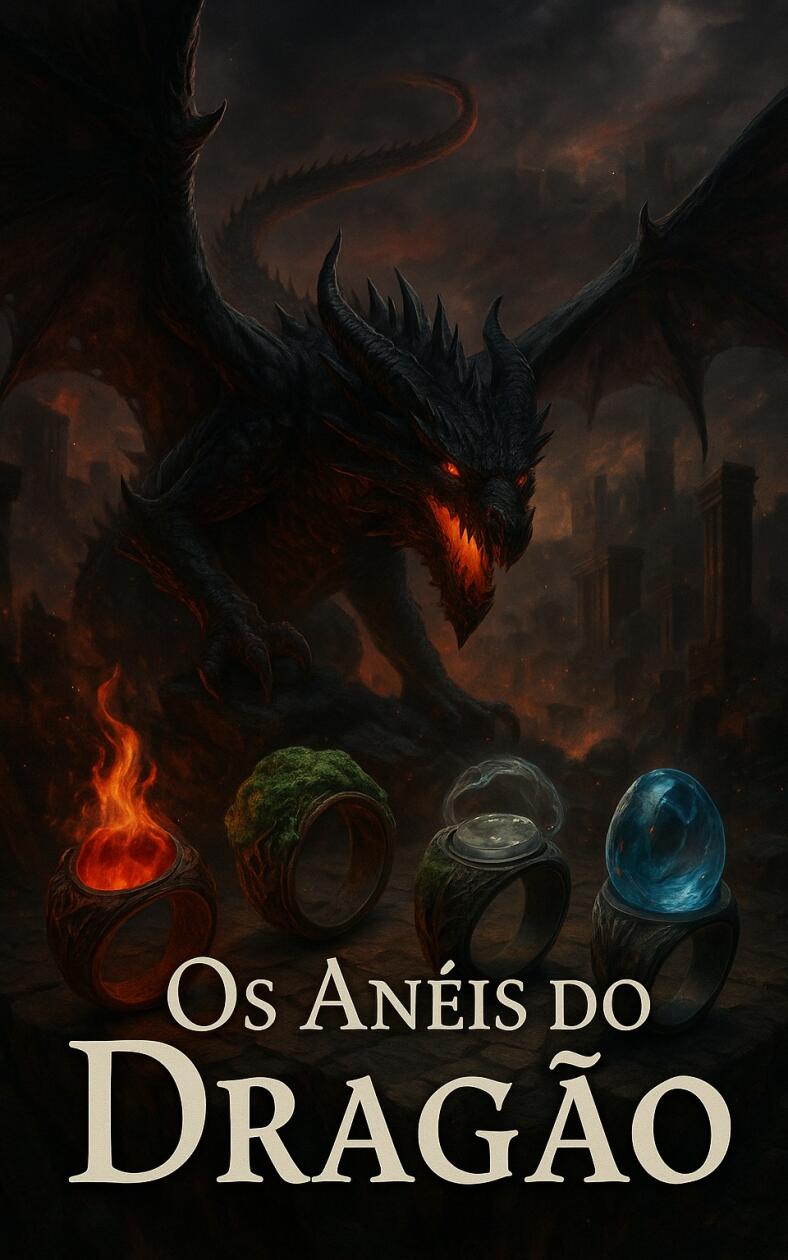

"The Rings of the Dragon" is an exciting journey of five brothers in search of his missing father eight years ago. Helena and Ulysses had five children and lived happily in a village, until King Aquines, obsessed with Helena, decided to capture her. To protect her, Ulysses kidnapped his wife and children and hid them in the forest. With the help of a witch, King Aquines finds the rock family, but Ulysses is captured and transformed into a dragon. The children thought the father had died, but years later, the youngest son has visions that indicate that Ulysses is alive and imprisoned in the king's castle. The brothers receive magical rings that contain powers from the elements of nature, and decide to face a dangerous journey to find their father. They have no idea that Ulysses was transformed into a dragon by the king. While fighting dangerous creatures and exceeding challenges, the brothers discover the truth about their father's fate and need to decide what to do to save him. With a mix of action, adventure and magic, "The Rings of the Dragon" is an exciting story about courage, loyalty and the power of family love.


The story tells the life of Kunoichi Yumi Kairyu showing her life from childhood to her collapse in adult life. I show in this story a little bit of what it's like to be a ninja these days, mixing modern concepts mixed with traditional ones.


Pokémon Ember is a Fanfic that tells the story of Red Akai, a young trainer on his quest to become the best there is. But what turned out to be a journey like any other, with an impressive twist, becomes something much more complicated and interesting.