Dom Casmurro
"Dom Casmurro" é um romance escrito pelo renomado autor brasileiro Machado de Assis. Publicado em 1899, o livro é considerado uma das principais obras da literatura brasileira e um clássico do realismo. A história é narrada por Bento Santiago, conhecido como Dom Casmurro, que relembra sua juventude e seu relacionamento com Capitu, sua amiga de infância e posteriormente esposa. O romance aborda temas como amor, ciúme, traição e memória. O enredo se desenvolve em torno do suposto adultério de Capitu, o que gera dúvidas na mente de Bentinho sobre a paternidade de seu filho. A narrativa é marcada pela subjetividade do protagonista e pelas reflexões profundas sobre a natureza humana. Machado de Assis utiliza uma escrita envolvente e irônica para explorar as complexidades dos relacionamentos humanos. Ele questiona a objetividade da memória e a confiabilidade das interpretações individuais dos eventos passados. Além disso, "Dom Casmurro" também apresenta uma crítica social sutil ao retratar os costumes da época, especialmente no que diz respeito às relações familiares e à posição da mulher na sociedade. Com personagens bem construídos e diálogos inteligentes, o romance cativa os leitores ao longo de suas páginas. A obra tem sido objeto de estudo em diversas áreas acadêmicas, desde a literatura até a psicologia. Entre as várias adaptações para o cinema e televisão feitas ao longo dos anos, destaca-se o filme "Capitu", lançado em 1968 e dirigido por Paulo César Saraceni. A trilha sonora do filme, composta por Edu Lobo, também ganhou destaque. "Dom Casmurro" é uma obra atemporal que continua a encantar leitores de todas as idades. Sua riqueza narrativa e temática o tornam um clássico da literatura brasileira, sendo uma leitura indispensável para aqueles que desejam conhecer mais sobre a obra de Machado de Assis.
Stories and Works
Discover recent reads set in this universe.


Roque faz um paralelo entre Capitu e Porcina e percebe que elas compartilham muito mais que olhos de cigana oblíqua e dissimulada


It was Saturday morning, and Bentinho, sleepy and lying on the floor, Escobar lying beside him and going back and forth between being awake and sleeping, didn't want to go home. Of course, he should go; he knew his mother was waiting for him. But he didn't want to: to be there, sprawled on the floor with Escobar, the morning sunlight gently bathing them both.


Mornings at the seminar were all the same, quiet and monotonous. It was just the seminary, the dark wooden table, the priests and boys. Among the boys, Escobar. They shared the bread. Smile, in the little holy supper for two. All the same mornings, all the same.

It was as if there were roots in her lungs, taking her flesh, using her blood for nourishment, its long stalk down her throat, finally blooming in her mouth. The metallic taste of blood on his tongue was unpleasant as he picked up the yellow carnations he'd vomited on the grass in the seminary garden. It was a distraction to have to go back to his empty room, where he knew his heart would break even more. Hanahaki disease AU.

The scene was simple: Escobar in the church, waiting, watching Bentinho.



It was just another rainy afternoon at the seminary, and Bentinho was almost asleep.
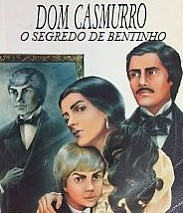
Bentinho's life was devastated. The doubt regarding the paternity of his son Ezequiel, the separation from his wife Capitu and, now, her death, all these questions afflicted Dr. Bento, facts that made him leave for treatment with Estevan, a well-known psychologist in the city.

Protect our refuge of stories
Every chapter that made you smile, cry, and dream only keeps thriving thanks to the care and support of our community.
We are not a massive corporation — +Fiction is an independent refuge, lovingly maintained by a single person for those who live through stories.
They chose to keep this haven alive. Join our heroes!






(and flowers are a mirror of who I am) Like a moth attracted to a flame, Bentinho was attracted to a painting in a dusty hallway.

Slender fingers caught Bentinho's attention, and he wondered - what would they look like in his palm? Would they be warm and soft, affable as Bentinho imagined them to be?

And when love is conceived where can it never be born?