
nebula
In linguistics, the notion of text is broad and still open to a more precise definition. Roughly speaking, it can be understood as a linguistic manifestation of an author's ideas, which will be interpreted by the reader according to their linguistic and cultural knowledge. Its size is variable. A set of articulated words and phrases, written on any support[1]. Written work considered in its original and authentic writing (as opposed to summary, translation, notes, comments, etc.)[2]. "A text is a linguistic occurrence, written or spoken of any length, endowed with a socio-communicative, semantic and formal unit. It is a unit of language in use."[3] The interest in the text as an object of study generated several important works by theoreticians of Textual Linguistics, who went through different phases whose main characteristics were to overcome the limits of the decontextualized sentence of traditional grammar and also to include the relevant roles of the author and the reader in the construction of texts. . A text can be written or oral and, in a broad sense, it can also be non-verbal. Critical text is a textual production that starts from a reflective and analytical process generating content with constructive and well-founded criticism. In graphic arts, text is the verbal, linguistic part, as opposed to illustrations. Every text must have some formal aspects, that is, it must have structure, elements that establish a relationship with each other. Within the formal aspects we have cohesion and coherence, which give meaning and form to the text. "Textual cohesion is the relationship, connection, connection between the words, expressions or sentences of the text[4]. Coherence is related to the understanding, the interpretation of what is said or written. A text must have meaning, that is that is, it needs to have coherence. Although cohesion is not a sufficient condition for utterances to be constituted in texts, it is the cohesive elements that give them greater readability and evidence the relationships between their various components, coherence depends on cohesion. [edit] Literary and non-literary texts Literary texts are those that, in general, aim to move the reader, and for that they explore connotative or poetic language. In general, there is a predominance of the emotional and poetic function. Examples of literary texts: poems, literary novels, short stories, soap operas. Non-literary texts intend to inform the reader directly and objectively, using denotative language. The referential function predominates in non-literary texts. Examples of non-literary texts: news and journalistic reports, texts from History, Geography, Science textbooks, scientific texts in general, cooking recipes, medicine leaflets. References ↑ CAMARGO and BELLOTTO, 1996:74. ↑ AURELIO. ↑ COSTA VAL, 1991. ↑ PLATO & FIORIN, 1996. [edit]Bibliography AURELIUS. See FERREIRA, Aurélio Buarque de Holanda. Aurélio Electronic Dictionary 21st Century. COSTA VAL, M. da Graça. Writing and textuality. São Paulo, Martins Fontes, 1991. CAMARGO, Ana Maria de Almeida; BELLOTTO, Heloísa Liberalli (eds.). Dictionary of Archival Terminology. São Paulo: Association of Brazilian Archivists São Paulo Center / Secretary of State for Culture Department of Museums and Archives, 1996. FERREIRA, Aurélio Buarque de Holanda. Aurélio Electronic Dictionary 21st Century. Version 3.0. São Paulo: Lexikon, 1999. KOCH, Ingedore Grunfeld Villaça; TRAVAGLIA, Luis Carlos. Text and coherence. 8th ed. São Paulo: Cortez, 2002. PLATO & FIORIN. To understand the text: reading and writing. 3.ed. Sao Paulo: Attica, 1996.
Synopsis

Recommendations
0Be the first to recommend this story to other readers!




More like this
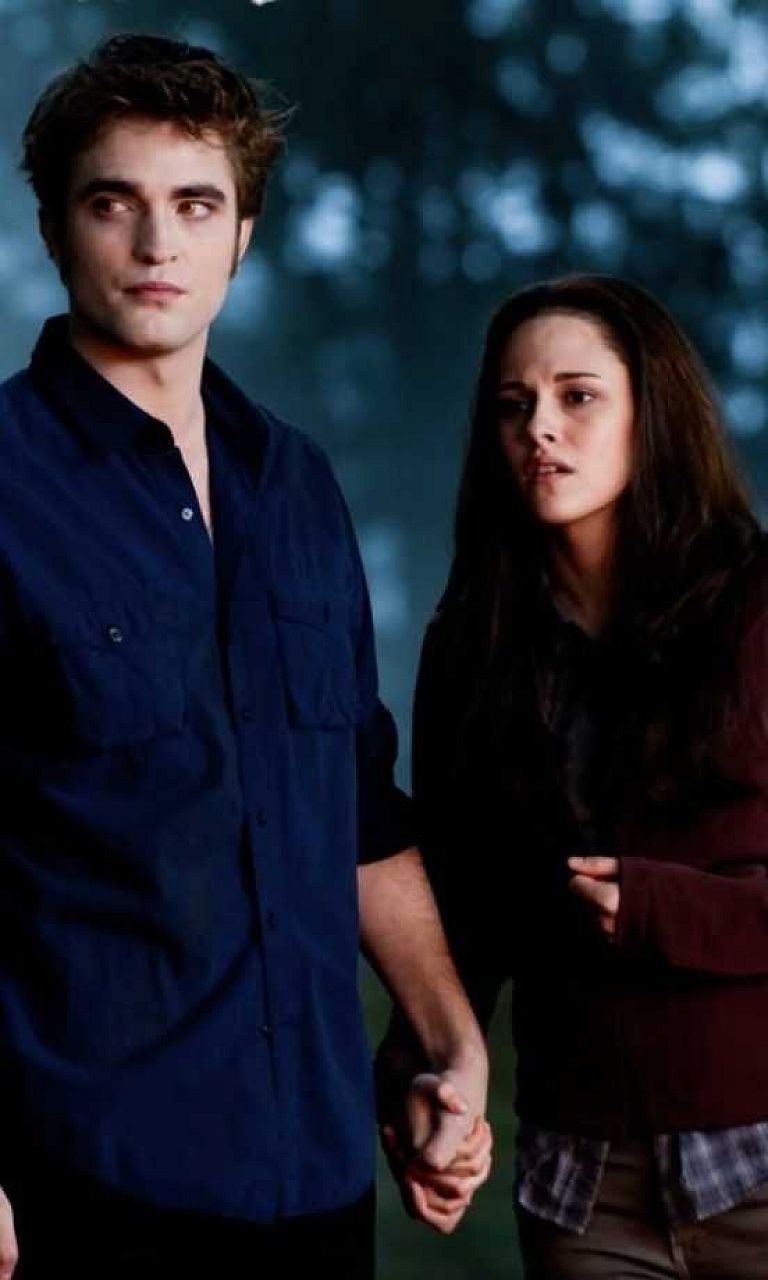

Edward Masen, 17, lives with his aunt and uncle after being in a car accident and losing both his parents and his eyesight. Bella Cullen, 117 years old, a stunning telepath. Guys, I'm terrible at synopsis, but read it, I guarantee you'll be much better lol


What if the world we know soon came to an end? Would you be prepared for this catastrophe? A family separated by a company, Jack as he likes to be called, lived alone in his immense mansion. Brother of the President of the United States of America, his brother's wife and also a geologist finds out about the great catastrophe. What will happen to this family? Even in a heart of stone, is there love?


You had just graduated in advertising, specialized in photography and needed a good job, you were 19 years old with the profile and dreams of a girl, they say that every teenager has an idol, someone to look up to, with you it was different it was a love for a lifetime, time passed he prevailed. I was a fan of the most desired man of the moment, the singer who gradually burst onto the hit charts, what you didn't imagine was that a dream would join with another and would become unique, if performing every dawn! Lucas Lucco, the new hit in the country, bursting at every place he went, needed. As a good singer needed a good team, and his was no longer enough for such a job, he would need ally, someone who was ready to help him, who understood fashion, media, people, someone who was there for him all the time, who had no family, and was young enough to keep up with a crazy routine. After a lot of searching, names, interviews, they find the perfect person, who knew you like no one else, and had all and even more requirements for the position, you were young and qualified enough, fate brought your dreams together in the best way Can a dream become a nightmare? Can love and hate exist in the same heart? Read, dream and discover.


It was all suddenly, in the blink of an eye, in less than two months everything had turned into chaos, deaths, wars, disappearances... But the worst thing is that no one knows where it started...

After kingdoms are attacked by Destroyers the kingdom of Livestoon discovers it is the next target and tries to defend itself, Nathan King of Livestoon sends his son Rupert out of the kingdom to hide, he will find Lucas Prince of Lovind, Helena a girl of noble family and Leyla a commoner, they go on great adventures to get the Sword of Godrim and stop the attacks and save the kingdoms that remain!

the soap opera started like this alice got there wanting to be the hottie the idiot roberta just wanted to be the hottie there alice told you that i help you babe vitoria car di ass you said you are ugly di more fou la she got juice in her head carla I just wanted to be the owner of mpedaso then diego was drinking in his ass pedro just wanted the owner of the world tomais was rich there me aline and fernando who kissing the canvas passed diego shirtless fernando kissed the canvas me who I'm pretty and gouty everyone loves me I went for a show and Fernando who got hit by the guy I died kkkkkkkkkkkkkkkkkkkkkkkkkkkkkkkkkkkkkkkkkkkkkkkkkkkkkkkkkkkkkkkkkkkkkkkkkkkkkkkkkkkkkkkkkkkkkkkkkkkkkkkkkkkkkkkkkkkkkkkkkkkkkkkkkkkkkkkkkkkkkkkkkkkkkkkkkkkkkkkkkkkkkkkkkkkkkkkkkkkkkkkkkkkkkkkkkkkkkkkkkkkkkkkkkkkkkkkkkkkkkkkkkkkkkkkkkkkkkkkkkkkkkkkkkkkkkkkkkkkkkkkkkkkkkkkkkkkkkkkkkkkkkkkkkkkkkkkkkkkkkkkkkkkkkkkkkkkkkkkkkkkkkkkkkkkkkkkkkkkkkkkkkkkkkkkkkkkkkkkkkkkkkkkkkkkkkkkkkkkkkkkkkkkkkkkkkkkkkkkkkkk I'm going to catch him in bed in a few hours kkkkkkkkkkkkkkk I saw torma in the ass idiot